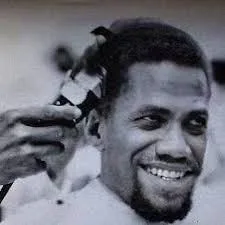
Malcolm X has his head shaved as part of the Hajj
In April of 1964, Malcolm X left the United States on his first extended trip aboard. He visited Egypt, Lebanon, Saudi Arabia, Nigeria, Ghana, Liberia, Senegal, Morocco and Algeria.
He made the pilgrimage or hajj to the Holy city of Makkah that every Muslim seeks to complete, which entitled him to the use of "El Hajj" in his name and he became known in the Muslim world as El Hajj Malik El Shabazz.
He made the pilgrimage or hajj to the Holy city of Makkah that every Muslim seeks to complete, which entitled him to the use of "El Hajj" in his name and he became known in the Muslim world as El Hajj Malik El Shabazz.
The Hajj solidified his journey towards traditional Islam and embracing a more inclusive and universal practice. It was a transformative experience that fundamentally shifted his worldview. The following excerpts are taken from letters written from abroad.
Jedda, Saudi Arabia
April 20, 1964
April 20, 1964
Never have I witnessed such sincere hospitality and the overwhelming spirit of true brotherhood as is practiced by the people of all colors and races here in this ancient holy land, the home of Abraham, Muhammad and all the other prophets of the Holy Scriptures. For the past week I have been utterly speechless and spellbound by the graciouness I see displayed all around me by people of all colors.
Last night, April 19, I was blessed to visit the Holy City of Makkah, and complete the "Omra" part of my pilgrimage. Allah willing, I shall leave for Mina tomorrow, April 21, and be back in Mecca to say my prayers from Mt. Arafat on Tuesday, April 22. Mina is about twenty miles from Mecca.
Last night I made my seven circuits around the Kaaba, led by a young Mutawif named Muhammad. I drank water from the well of Zam Zam, and then ran back and forth seven times between the hills of Mt. Al-Safa and Al-Marwah.
There were tens of thousands of pilgrims from all over the world. They were of all colors, from blue-eyed blonds to black-skinned Africans, but were all participating in the same ritual, displaying a spirit of unity and brotherhood that my experiences in America had led me to believe could never exist between the white and non-white.
Last night, April 19, I was blessed to visit the Holy City of Makkah, and complete the "Omra" part of my pilgrimage. Allah willing, I shall leave for Mina tomorrow, April 21, and be back in Mecca to say my prayers from Mt. Arafat on Tuesday, April 22. Mina is about twenty miles from Mecca.
Last night I made my seven circuits around the Kaaba, led by a young Mutawif named Muhammad. I drank water from the well of Zam Zam, and then ran back and forth seven times between the hills of Mt. Al-Safa and Al-Marwah.
There were tens of thousands of pilgrims from all over the world. They were of all colors, from blue-eyed blonds to black-skinned Africans, but were all participating in the same ritual, displaying a spirit of unity and brotherhood that my experiences in America had led me to believe could never exist between the white and non-white.